Tuesday, 15 September 2015

Turtles in Costa Rica by Emily Lauterpacht

After the marine biology trip that I went on this summer, I have found turtles and their nesting habits very interesting. Today I read about some turtles nesting in Costa Rica.


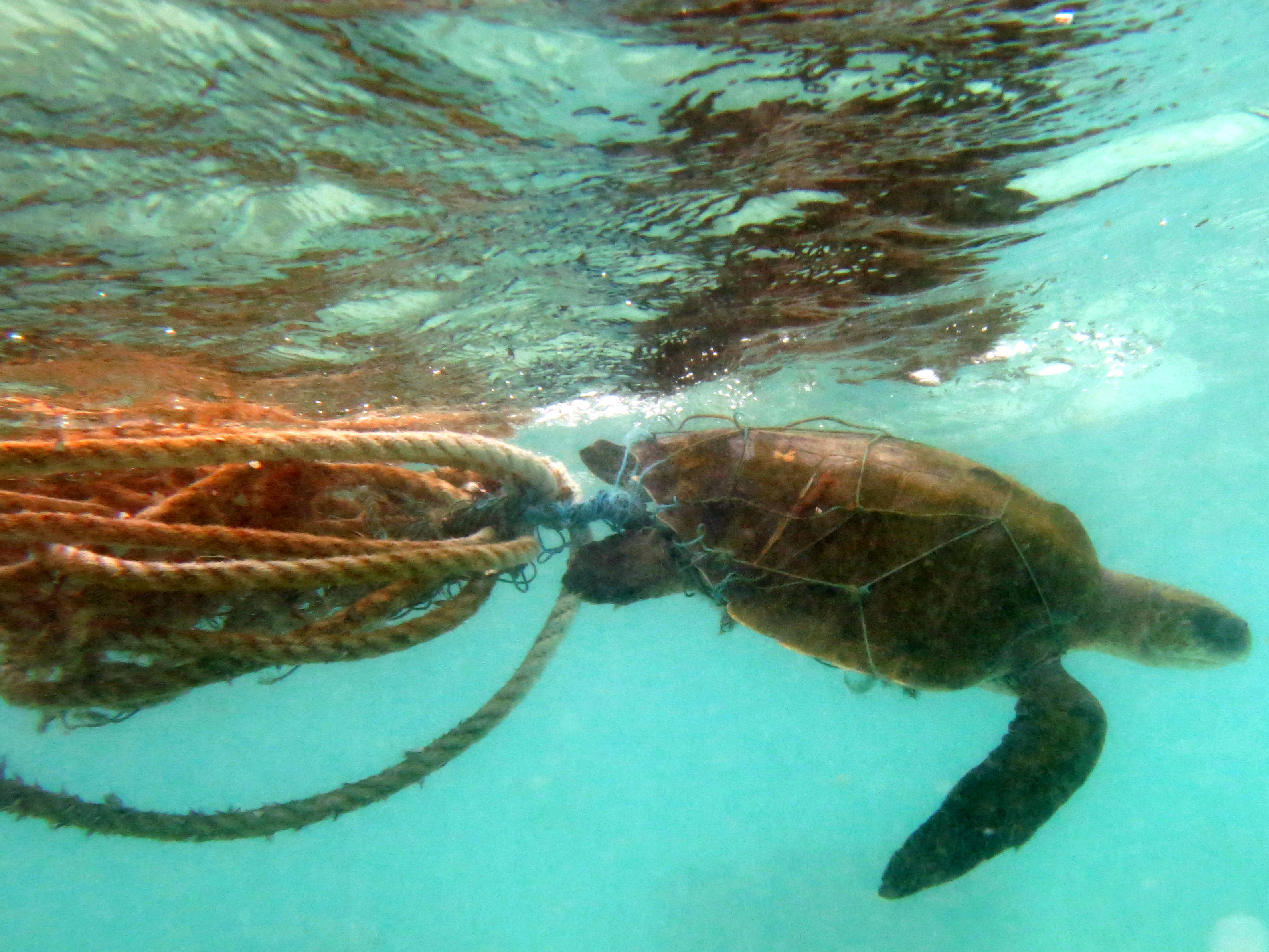
This is how the trip ashore of the Olive Ridley Turtles of the Ostional Wildlife Refuge should have looked. However, tourists managed to swarm the beach, where they touched the turtles, took flash pictures of them and stood on top of where they had recently laid eggs. 
The Olive Ridley Turtles are classified as vulnerable and, like many other marine species, is at threat from waste found in the ocean, as well as many other things like climate change. 

Caught in a drifting net
As these beautiful creatures are already endangered, it sickens me that tourists could so selfishly and mindlessly endanger them even more. 
For more information read this article, or visit the Ostional Wildife Refuge Facebook page. 
A petition has also been started here to encourage the government to make it illegal to sell the eggs of endangered turtles in the area. 

Emily Lauterpacht


Thursday, 10 September 2015

Facts by Emily Lauterpacht

Over the last week or so, I have come across many strange and interesting facts, so have compiled a list of a few of my favourite.


Birds can't taste spicy food. 

There exists a species of worm known as the pigbutt worm or flying buttocks, which, as the name suggests, looks like a disembodied bottom. 

In 1984, Barry Marshall drank a petri dish of bacteria to prove that they caused stomach ulcers. He won the Nobel Prize in Medicine in 2005 for this research. 

By 2050, it is predicted that 99% of seabirds will have some plastic waste in them, due to the massive pollution problems caused by the "islands" of floating plastic.

Darwin's frogs keep their offspring safe in a very unusual way - the male keeps them in his vocal sac until they are fully developed, when he vomits them out. 

Scientists discovered about 1500 new bacteria species, in 2012, in human belly buttons. 

Tigers' paw prints are known as pug marks.

Polar Bear livers contain so much Vitamin A, that if a human ate one, they would die.

Northern Quolls are marsupials, but don't have a pouch.

Like many amphibians, the axolotl is able to regenerate limbs. Unusual though, it is also able to rebuild its jaw, spine and brain without any scarring.

The human pancreas produces bicarbonate, which is essentially baking soda. 


Emily Lauterpacht


Thursday, 27 August 2015

How Do Animals Sleep? by Emily Lauterpacht

On a recent Marine Biology trip to Turkey, where we were studying turtles, the question of how they slept arose. A few ideas, such as “with one eye open”, were tossed around, before the question was dismissed. However it got me thinking about how they, and other animals, sleep.   


Turtles

Turtles don’t sleep so much as rest; they will do this under ledges or rocks where possible, presumably to stop themselves floating off. However, if they are in deeper water, they will float near the surface. While resting, they close their eyes like humans, but are conscious enough to know to surface in order to breathe when necessary.

Horses

Although many horses have become domesticated, and so are rarely preyed on, they still have many adaptions of a prey animal; by being able to sleep standing up, horses are able to escape danger more quickly, as they don’t have to waste time struggling up.  Horses have a network of ligaments and tendons called the stay apparatus that allows them to sleep standing up, by locking their legs so that they are able to relax their muscles. The stay apparatus in horses’ front and back legs differ; while the front leg just needs to relax to use the stay apparatus (it is always in place), a horse needs to literally hook one bone over a knob on another bone to engage the stay apparatus in its hind legs. However, usually once a day, a horse will lie down for a deeper sleep, as it seems to be unable to achieve this while standing.

Dolphins

Dolphins, along with other cetaceans (whales, orcas and porpoises) sleep in a similar way to birds – a type of sleep called unihemispheric slow-wave sleep.
This means that when a dolphin “sleeps”, half of its brain (one hemisphere) shuts down, and it closes the opposite eye. This then leaves the other half of the brain and the other eye to control breathing, observe surroundings and maintain muscle movement to keep the dolphin warm. While in this sleep-like state, the dolphin will either swim slowly or stay still nearthe water’s surface.
Human babies, like many other animals, spend a significant amount of time sleeping, but dolphin babies (calves) don’t sleep at all in the first few months after they are born and when they become older, they sleep while being towed along in their mother’s slipstream (echelon swimming). 

Bats

Most people know that bats sleep hanging upside down, but not many know why. The main reason is that, unlike birds, their wings don’t produce enough lift to take off from the ground, so by roosting upside down, they can spread their wings and “fall” into flight. It also helps them hide from predators. In a somewhat similar way to horses, bats have evolved a mechanism to enable them to lock their talons closed, so that they can relax while hanging upside down; their tendons in their talons are connected to their upper bodies, meaning that their body weight pulls on the tendons, locking the talons closed.  
Bats are also known for being nocturnal, so they sleep during the day.

Swifts

The swifts found in the UK have normally migrated from South Africa, a distance of over 6000 miles. Swifts rarely land (sometimes they won’t land for 6 months), other than at nest sites, and routinely fly at 10,000ft at night-time. This leads us to presume that swifts must sleep “on the wing”, although it has not been proved, as no electroencephalograms (EEG) have ever been performed

http://www.mybedframes.co.uk/media/215178/MBF-Animal-Sleeping-Habits.jpg

Emily Lauterpacht


Sunday, 16 August 2015

The Science of Beauty by Emily Lauterpacht and Lauren Carter

What is beauty?

   “In all the arts, something is being explored that has to do with beauty” – David Trubridge
   Beauty can be defined as a characteristic that ‘provides a perceptual experience of pleasure or satisfaction’, but what really is the meaning of beauty? Why is it that we find some people attractive and others unattractive, and why does the concept of beauty play such an important role in our lives?
     Many scientific studies have been carried out in order to discover what it is that makes someone attractive and the reasoning behind it. One of the greatest links that has been found to explain what makes someone attracted to someone else is the link between attractiveness and evolution; the concepts of what we find attractive often lie behind what we look for in a partner and what characteristics will be beneficially passed on to our offspring. It has been found that our subconscious brains look for desirable traits that we wish to pass on to our offspring so that they may have a higher probability of finding a mate and consequently reproducing.  
     Results have also shown that one of the key ideas behind the science of beauty is the idea of symmetry; a face which consists of a high degree of symmetry is often seen as more attractive than one where the features may be slightly distorted. According to a study carried out at the University of Louisville, where a group of individuals were shown pictures of people of different ethnicity they all showed the same general preferences – that which showed the highest rate of symmetry.  A superficial formula has been created that show the ideal proportions for a female face, including:
  • Eyes should be 1/5 the width of the face
  • Chin should have a length 1/5 the height of the face
  • Lip edges should line up with the pupil of the eye, no thicker that the closed eyelids
  • The nose area should be less than 5% of the area of the whole face, with the bridge of the nose extended straight.
    These features are often seen as what makes people beautiful and any deviations, such as a crooked nose, disrupt this perception of beauty.
    It has also been demonstrated that men are attracted to features that signal youth, including full lips and a good muscle tone. Features that represent good health such as clear and smooth skin are also seen of as desirable.
    Many studies have been conducted in order to comprehend the question of what beauty means. These include studies of what causes a person to be attracted to someone else, and what influences this attraction. Studies at Stockholm University have proposed the idea that our attraction to other people is caused by hormones that we are exposed to both in the uterus and also when going through puberty. Studies from the University of Montreal have also shown that we are generally attracted to people who both look and smell like our own parents; this theory has been proven with a study at the University of Chicago where a ‘fragrance test’ was taken to see what smells people were most attracted to and the majority chose ones that had vast similarities to their parents.

How does being beautiful affect day-to-day life?

    The way we look affects us from birth; as of the day we are bought into the world we are judged on our appearance, from being treated differently as babies through to the careers that we pursue in later life. Studies have shown that children who are thought to be less attractive often get less attention in class than their attractive counter parts. They also receive fewer awards and gain less approval from parents. Later in life beauty may even stretch to saving someone’s life, as you are about 20% more likely to be assisted by strangers in an emergency if you are attractive.
     Most advantages associated with beauty can be explained by the ‘Halo Effect’. This is a theory of when a beautiful person is thought to be better in some way by those who don’t know them, due merely to their appearance. Their attractiveness may lead to the assumption that they are more desirable, confident, competent, trustworthy or likeable.  These perceived traits have a range of effects, from being paid more to receiving lighter court sentences. Those considered beautiful are more likely to get promotions, as they are generally more persuasive. This may be due to a greater self-confidence, or any bias, due to the ‘Halo Effect’. However, companies with an attractive executive have actually been proven to have higher sales (according to a study conducted on 300 Dutch advertising agencies), so these seemingly unreasonable promotions are actually to an extent beneficial and can therefore be somewhat justified.
      There are few negative assumptions associated with beauty and they tend to stem from jealousy. This is especially common between people of the same sex, who are seen as rivals when trying to find a mate. People may see those who are more attractive as less talented, more materialistic, snobbish, vain and shallow. However no studies have ever been carried out to support these ideas. There is also the “dumb blonde” stereotype, although it is thought that those with symmetrical bodies (also linked with beauty), are more intelligent.
     While generally it is presumed that if you are more attractive, you are more likely to find a mate, beauty may also carry certain disadvantages. Some beautiful people struggle to attain satisfaction or settle on one person, as they have too many choices, and so just one person may never be good enough.

Beauty and the body

      When it comes to the body, most of what is considered attractive is down to evolution. Desirable bodies are ones which we, normally subconsciously, think will be best for reproduction and passing on our genes. This is where the stereotype of all men liking women with large breasts, slim bodies and wide hips come from (these form the ideal hour glass figure). Large breasts indicate an ability to feed offspring, and slim bodies are a suggestion of fitness and general health. The most attractive bodies have a waist-to-hip ratio of 7:9, as wide hips help reduce problems when giving birth. However, these body ideals vary from country to country. In Brazil they prefer “small breasts and big derrieres, whereas Americans want big chests” according to the well-known plastic surgeon, Dr Ivo Pitanguay. In areas where food is scarce, or in the past in Britain, the larger you are, the more attractive you are considered to be, which contrasts with the size zero culture found in Britain and America today.  These disparities, like the comings and goings of beards throughout the ages, are thought to reflect cultural variations and fashions.
      As with facial symmetry, body symmetry is considered most attractive. It is considered an indicator of social dominance, fitness and overall health. Body symmetry, along with general attractiveness has been linked to intelligence according to Satoshi Kanazawa, an evolutionary psychologist.

     An overall conclusion can be drawn that beauty stems generally from symmetry and the idea of ‘normal sized’ features, which are generally perceived as more desirable.
‘If vanity is not our chief feature, it is at least our secondary feature’ – Robert Burton
     However while the impacts of beauty are widespread, and the influence it has on life is substantial, it is crucial that we, as a species, do not let our lives be run by our appearance. Beauty is only one factor of what makes us attractive and in its very nature cannot be studied; the research of this topic therefore is not the study of beauty, merely the study of conventional attractiveness.

Emily Lauterpacht and Lauren Carter
Monday, 10 August 2015

Technical issues

After a few months offline due to technical issues, the blog is back up and running. I will be uploading a new post in the next few days.

Emily Lauterpacht

Thursday, 14 May 2015

Nepal Earthquakes by Emily Lauterpacht

On Saturday 25th April, an earthquake of magnitude 7.9 hit Nepal, killing over 8000 people. On Tuesday 12th May a second earthquake of magnitude 7.3 hit Nepal, just over 2 weeks after the initial quake.


I wrote an article (read it here) the day the first earthquake hit Nepal. Since then the death toll has risen to over 8000. We now know that the focus of the earthquake was about 15 km deep (considered shallow and is likely to cause more damage than an earthquake with a deeper focus), lasted about 20 seconds, and nearly 18000 people were injured. 
There were 41 aftershocks between the 25th and 27th April, with magnitudes ranging between 4.0 and 6.6. It is normal to experience aftershocks in the days after a large earthquake, with the magnitude of these earthquakes normally decreasing as time passes after the initial quake. What is not so normal, is what followed last Tuesday. 
On 12th May, a 7.3 magnitude earthquake occurred. With another shallow focus (18.5 km deep), the tremors were felt up to 2500 km away. Just a few minutes later, an aftershock of magnitude 6.3 followed, which could be felt as far away as New Delhi, India. The death toll of this quake is now above 100 people, and is still slowly rising. 

So what has caused all of these earthquakes?

Nepal lies on a boundary between two tectonic plates: the Indian Plate and Eurasian Plate. The collision of these two plates caused the formation of the Himalayas 50 million years ago (see picture below). The two plates are still moving towards each other, at about 45mm a year. When plates are moving towards or along side each other, they sometimes stick, and pressure builds up, as the convection currents in the mantle below move. Eventually this pressure is released in a series of earthquakes. 
While the earthquake on 12th May was a lot larger and later than aftershocks of the earthquake on 25th April would have been expected, it is still considered an aftershock as they occurred on the same fault, although the original earthquake was further west than the one that followed last Tuesday. 

What can you do to help?

After the first quake, Rugby School sent many tents and sleeping bags out to Nepal (see picture below), and all the pupils are making donations today, following the second quake, which will be put together and sent off. 
A quick google search comes up with many different ways that you can donate to help the people of Nepal, but The Guardian have summarised most of the ways here


Formation of the Himalayas

The tents and sleeping bags donated by Rugby
School, all boxed up, ready to be sent to Nepal


Emily Lauterpacht